
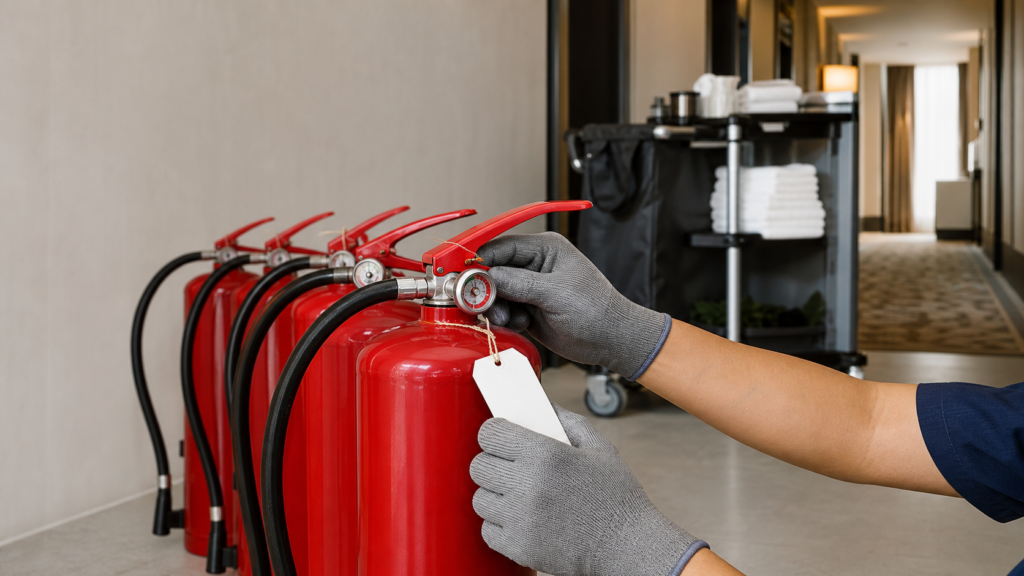
In a hotel, fire extinguisher servicing is not a back-office chore. It affects guest corridors, kitchens, function rooms, laundry areas, parking spaces, staff quarters, storage rooms, and inspection readiness. A missing tag or weak pressure gauge may look small during a busy day, but it points to a larger problem: the property may not have a reliable system for keeping extinguishers ready.
For hotel operators in La Union, Baguio, and Northern Luzon, the right servicing partner should help you manage inventory, inspection, refilling, testing, tagging, records, and practical scheduling. Prime Solutions Fire Protection positions fire protection first, with extinguisher supply, refilling, maintenance, FDAS, kitchen hood suppression, and BFP-readiness support. That broader view matters because extinguishers are one part of the hotel’s fire-safety program, not isolated red cylinders on the wall.
Start With A Complete Extinguisher Inventory
Before asking for servicing, make sure the property knows what it has. Walk every area and list each unit by location, type, size, condition, tag date, pressure status, mounting condition, and accessibility. Include guest floors, lobby, restaurant, kitchen, back-of-house corridors, electrical rooms, laundry, storage, parking, generator area, staff areas, offices, and roof or mechanical rooms.
A hotel inventory should be specific. “Second floor hallway” is better than “upstairs.” “Kitchen dry storage entrance” is better than “near kitchen.” Clear location names help staff, technicians, and inspectors understand the same map.
If the property has grown through renovations, it may have mismatched units, missing brackets, faded labels, blocked cabinets, or extinguishers moved by staff. Servicing is the right time to correct the list.
Match Servicing To Actual Hotel Risks
Hotels combine several fire-risk profiles. Guest rooms have electrical devices and personal belongings. Kitchens may involve cooking oil, LPG, hoods, and hot equipment. Function rooms have changing layouts. Laundry and linen areas hold combustible materials. Parking and generator areas introduce fuel, vehicles, and mechanical equipment.
One extinguisher type or size may not fit every location. During servicing, ask whether each unit still matches the hazard nearby. If a storage room became a pantry, if a small cafe expanded into a hotel restaurant, or if a generator area was added, the extinguisher plan may need updating.
This does not mean making dramatic claims or overbuying. It means treating servicing as a chance to compare the current layout against the actual use of each space.
Inspection, Refilling, Recharge, And Testing Are Different Jobs
Hotel staff often use the word “servicing” for everything. A good provider should explain the difference. Visual inspection checks condition, pressure, pin, seal, hose, nozzle, label, corrosion, and access. Refilling or recharge restores a unit that has been used, discharged, under pressure, or scheduled for service. Testing addresses cylinder condition when required by the unit type and service rules. Tagging and reports document what was done.
Prime Solutions’ extinguisher refilling page lists inspection, refilling, recharge, pressure testing, tagging, reports, and maintenance. That is useful because hotels need the full service trail, not just a quick wipe-down.
Ask which units can remain in place, which must be pulled out, how replacements or temporary coverage will be handled, and what documentation will be returned.
Schedule Work Without Disrupting Guests
Hotel servicing has an operations problem: safety work must happen without confusing guests or blocking corridors. Plan timing with housekeeping, engineering, security, kitchen, and front office. Avoid peak check-in, breakfast rush, event ingress, or narrow corridor cleaning schedules.
If extinguishers need to be removed for refilling, staff should know which locations are temporarily affected and how coverage is maintained. Do not allow units to disappear without a written pullout list. The technician and hotel representative should agree on counts before and after servicing.
For Baguio properties, La Union resorts, and Northern Luzon hotels with seasonal demand, schedule preventive work before the busy period instead of waiting for inspection pressure or holiday occupancy.
Tags And Records Should Be Easy To Audit
A tag helps, but it is not the whole record. Keep a hotel-level file with the inventory, service dates, findings, refilled units, replaced parts, pressure-test notes if applicable, technician details, photos if useful, and recommendations. Digital copies help managers review the file even when the engineering logbook is in another office.
The record should make three things clear:
- Which extinguisher was checked
- What was done to it
- What needs follow-up
Avoid vague documents that say only “serviced all units” without location detail. If an inspector, owner, or manager asks about a specific unit near the kitchen or third-floor corridor, the record should answer quickly.
Train Staff On What To Notice
Hotel teams do not need to become extinguisher technicians, but they should know what to report. Housekeeping may see blocked cabinets. Security may see missing pins. Kitchen staff may notice corrosion, discharge, or units moved out of place. Engineering may notice pressure concerns during rounds.
A simple staff checklist can include: visible and accessible, mounted correctly, no obvious damage, pin and seal present, gauge in normal range, tag current, and location not blocked by carts, linens, decorations, or event equipment.
Prime Solutions’ broader fire-safety positioning includes maintenance, consultation, and compliance support. Use that relationship to make the hotel’s own checks easier between professional service visits.
Coordinate With Other Fire Protection Systems
Extinguishers are only one layer. Hotels may also depend on FDAS, emergency lights, kitchen hood suppression, sprinklers, alarms, evacuation routes, and staff procedures. When servicing reveals repeated problems, such as extinguishers being blocked by banquet setups or kitchen units being exposed to grease and heat, the issue may require layout changes or additional fire-safety planning.
For hotels with restaurants, ask whether kitchen hood suppression and extinguishers are being reviewed together. For properties with multiple floors or annex buildings, ask whether FDAS and extinguisher locations support the same emergency response plan.
Buyer Questions For A Servicing Provider
Before approving a provider, ask:
- Will you create or update a unit-by-unit inventory?
- Do you inspect, refill, recharge, test, tag, and report as needed?
- How will pulled-out units be tracked?
- Can work be scheduled around hotel operations?
- What documentation will we receive?
- Can you advise when units no longer match the nearby risk?
- Do you also support related fire-protection systems?
The answer should be practical and written. Hotels cannot rely on memory when guest safety, inspection readiness, and owner reporting are involved.
When To Ask Prime Solutions For Help
If your hotel has unclear records, expired tags, recently renovated areas, a busy kitchen, new function spaces, or multiple buildings, treat extinguisher servicing as a planned maintenance project. Prime Solutions Fire Protection serves La Union, Baguio, Agoo, and Northern Luzon with fire extinguisher refilling, maintenance, fire protection systems, and safety support.
The goal is not only to pass a visible check. It is to know that each extinguisher is in the right place, ready for its intended risk, documented properly, and easy for staff to monitor between visits. That is the servicing standard hotel operators should expect.
FAQs
What should hotel extinguisher servicing include? It should include a unit inventory, condition checks, pressure and seal review, refilling or recharge when needed, tagging, records, and clear follow-up notes.
Should hotels track each extinguisher by location? Yes. Location-level records help staff, technicians, managers, and inspectors confirm which unit was serviced and what action was taken.
Can extinguishers be removed for refilling during hotel operations? Yes, but the pullout should be tracked and temporary coverage should be planned. Units should not disappear without a written count and return record.
Do kitchens need special attention? Yes. Hotel kitchens may have cooking oil, LPG, hoods, heat, and heavy use. Extinguishers should be reviewed alongside kitchen suppression and maintenance practices.
How can staff help between service visits? Staff can report blocked units, missing pins, damaged hoses, low pressure, corrosion, expired tags, or extinguishers moved from their assigned locations.