
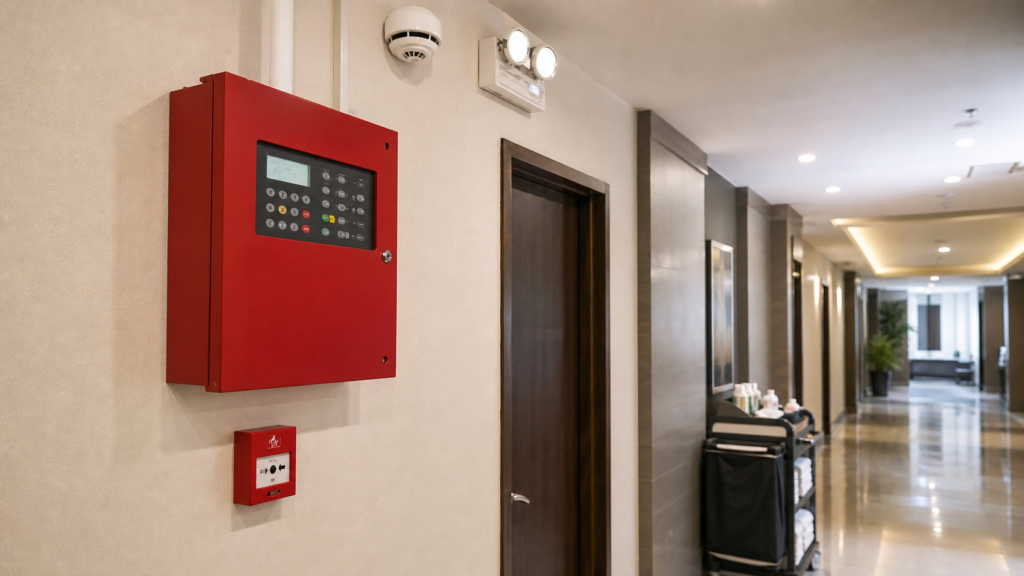
Hotel fire detection and alarm planning is different from planning a small office or single-storey shop. Hotels have sleeping guests, staff shifts, kitchens, laundry areas, electrical rooms, storage spaces, parking areas, and public corridors that must work together during an emergency. For hotel operators in La Union, Baguio, and Northern Luzon, a practical FDAS plan should help people detect risk early, understand where the alarm came from, and respond without confusion.
Prime Solutions Fire Protection describes its fire alarm service as site inspection, system design, installation, testing, documentation, maintenance, and upgrades. That full lifecycle matters for hotels because a fire alarm system is not only a purchase. It is a system the property must operate, maintain, and explain to staff long after turnover.
Begin With The Hotel Layout And Occupancy
Before comparing fire alarm proposals, map the property. Include guest rooms, corridors, stairwells, lobby, restaurants, kitchens, function rooms, offices, storage areas, laundry, electrical rooms, generator areas, pump rooms, parking, and staff-only spaces. A hotel with many small rooms and corridors has different detection and notification needs from a warehouse or open-plan commercial space.
Guest behavior also matters. Some occupants are asleep, unfamiliar with the building, or visiting from another place. Alarm audibility, visible notification, evacuation routes, and staff response procedures should be considered during planning. The FDAS should support real people in a real building, not just satisfy a device count on a quotation.
Choose Zoning That Helps Staff Respond
The difference between conventional and addressable systems should be discussed in practical terms. A conventional system groups devices by zones. An addressable system can identify a specific device location. For a hotel, the useful question is how quickly guards, front desk staff, maintenance staff, or managers can interpret the panel and verify the alarm.
A zone label such as ‘third floor west guest corridor’ is more useful than a vague label that only the installer understands. If the property has multiple wings, floors, buildings, or function areas, the FDAS plan should make the alarm location clear enough for trained staff to act quickly.
Review High-Risk And High-Confusion Areas
Hotels contain areas where nuisance alarms, delayed detection, or poor device placement can create problems. Kitchens, laundry areas, dusty storage rooms, humid corridors, mechanical spaces, and electrical rooms should be reviewed carefully. Detector selection and placement should fit the environment so the system remains dependable and manageable.
The goal is not to hide alarms from inconvenient areas. The goal is to design the system so it detects risk appropriately while reducing avoidable trouble signals and nuisance alarms. A proper site inspection should identify where heat, steam, dust, insects, air movement, or access limitations may affect the design.
Coordinate FDAS With Other Hotel Systems
A hotel FDAS may need to coordinate with emergency lighting, exit signage, kitchen hood suppression, sprinkler or pump systems, elevators, access control, CCTV, public address, or building management routines. The exact integrations depend on the property, but the planning conversation should happen before installation.
For example, staff need to know what happens when an alarm activates. Who checks the panel? Who contacts management? Who assists guests? Are there locked areas that responders need to access? Are there guests with mobility concerns? The equipment plan and the operating procedure should support each other.
Compare Proposals Beyond The Panel Price
A lower FDAS proposal may look attractive until exclusions appear. Compare system type, panel capacity, device count, detector type, notification devices, cable routing, conduit or protection method, testing scope, labeling, turnover documents, maintenance support, and upgrade allowance. Ask what is included, what is excluded, and what may change after the site inspection.
Hotel operators should request a written scope that is specific enough to review internally. It should explain which areas are covered, how zones or addresses are labeled, how staff will be oriented, and what documents will be handed over. ‘Standard installation’ is not enough unless the supplier defines what standard means for that building.
Treat Documentation As Part Of The System
Documentation is not paperwork for its own sake. It helps the owner maintain the system, brief staff, prepare for inspections, and troubleshoot future issues. Keep device lists, panel information, layouts, test records, as-built notes, service reports, warranties, and contact details in one controlled file.
Prime Solutions also offers practical BFP compliance assistance, but final requirements and findings depend on the property and the relevant authority review. A contractor can help prepare, test, document, and correct visible issues, but no supplier should promise an inspection result before the site is reviewed.
Plan Maintenance Before Problems Appear
Hotels are active environments. Renovations, room repairs, ceiling work, water leaks, dust, insects, guest damage, staff changes, and power issues can affect fire alarm reliability. Preventive maintenance should include panel checks, device testing, battery condition, visual inspection, correction of trouble signals, label review, and updated records.
Staff should be trained to report trouble signals instead of silencing or ignoring them. A small fault can become a larger risk if it stays unresolved. For hotels, maintenance planning is also a business continuity issue because unresolved alarm problems can disrupt operations and guest confidence.
Practical Buying Sequence For Hotel Operators
Use this sequence before approving an FDAS project:
- Gather floor plans, occupancy details, and current fire safety records.
- Walk the site with the contractor and identify high-risk areas.
- Review conventional versus addressable options based on response needs.
- Confirm detector locations, notification coverage, zone labels, and panel location.
- Ask for a written scope with inclusions, exclusions, testing, and turnover documents.
- Schedule staff orientation and preventive maintenance after installation.
This process helps the property compare proposals fairly and avoid decisions based only on device count.
When To Ask Prime Solutions For Help
If your hotel, resort, inn, dormitory, or lodging property in La Union, Baguio, or Northern Luzon is planning a new FDAS, replacing an old panel, preparing for inspection, or trying to reduce recurring faults, start with a site visit. Prime Solutions Fire Protection can assess the actual layout, explain system options, prepare a clearer scope, and support testing, documentation, and maintenance.
A good FDAS plan should make the building easier to manage during a stressful moment. It should help staff locate the alarm, guide guests more calmly, and keep the system maintainable over time. That is the buying goal: practical detection, clearer response, and support that continues after installation.
FAQs
Why is FDAS planning different for hotels?
Hotels have sleeping guests, public areas, staff-only spaces, kitchens, corridors, and multiple shifts. The FDAS must support clear detection, notification, and staff response across the whole property.
Should a hotel choose an addressable or conventional fire alarm system?
It depends on building size, layout, risk, budget, and response needs. Addressable systems can identify specific device locations, while conventional systems group devices by zones.
What should an FDAS proposal include?
It should include system type, panel capacity, device locations, detector types, notification devices, cable routing, testing, documentation, staff orientation, maintenance support, and exclusions.
Can a contractor guarantee BFP approval?
No. A contractor can support preparation, testing, documentation, and corrections, but final requirements and findings depend on the property and authority review.
How often should a hotel review its FDAS?
Review it after renovations, layout changes, recurring faults, inspection findings, or operational changes, and maintain a regular preventive service schedule.